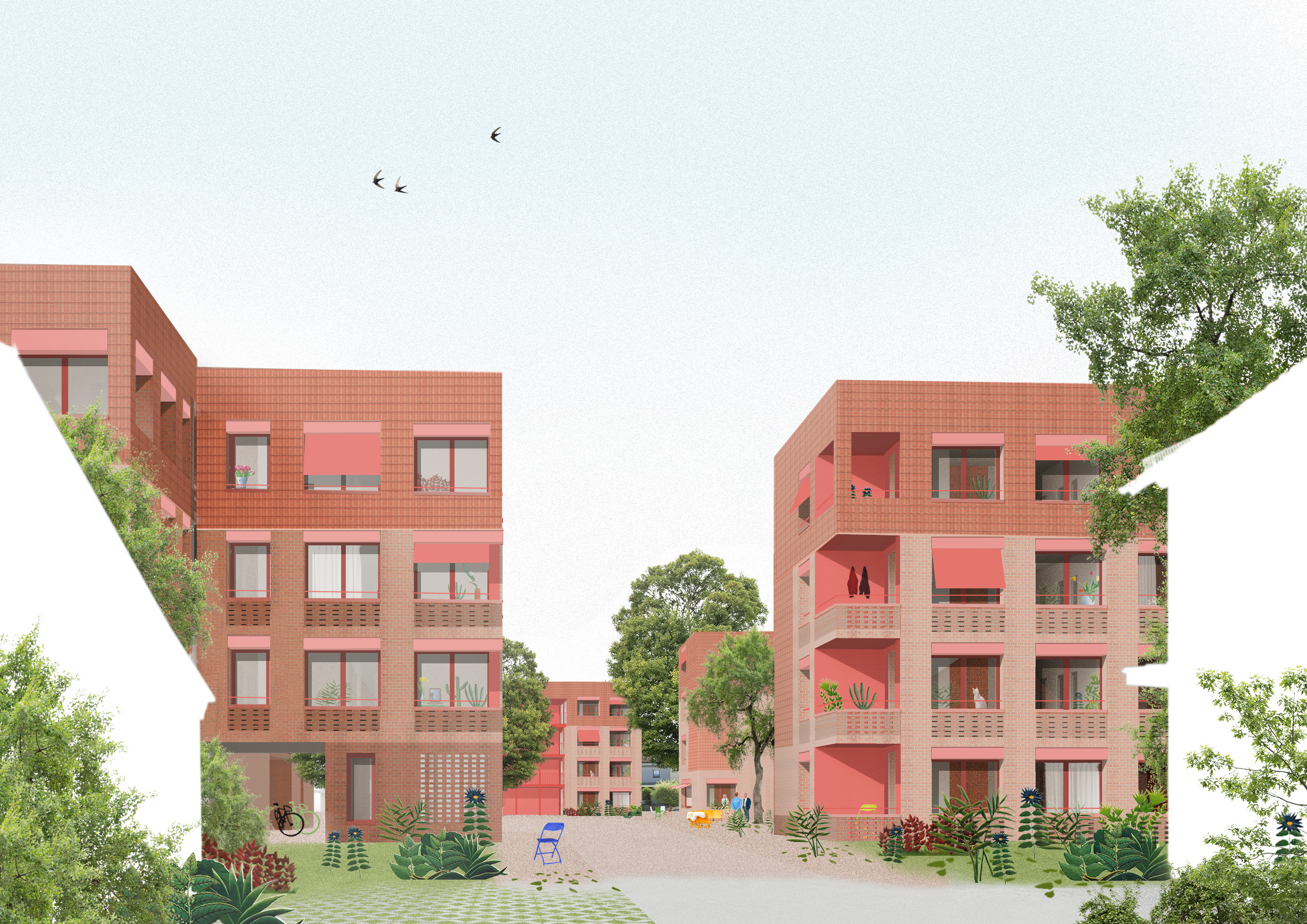
Manzinger Strasse Erding
Five individual buildings form a spatial sequence that creates identity through its ensemble effect. Open spaces structured like squares organize the neighborhood and create a smooth transition between public, communal, and private areas. Existing trees that characterize the location are integrated and lend the ensemble atmosphere and continuity. As 5- to 6-unit buildings, the structures enable efficient development while promoting neighborhood and community spirit.
mehr- Location: Erding
- Competition: 08-10/2025
- Building Site: approx. 9.350 m2
- Gross Floor Space: approx. 11.600 m2
- Floor Space Ratio: approx. 1,13
- Sponsor: Baugenossenschaft Erding e.G.
- Project Team: Florian Hartmann, Andreas Müsseler, Oliver Noak, Lisa Yamaguchi with Victoria Fernández, Paulo Mota, Florian Söllner, Ninon Romain
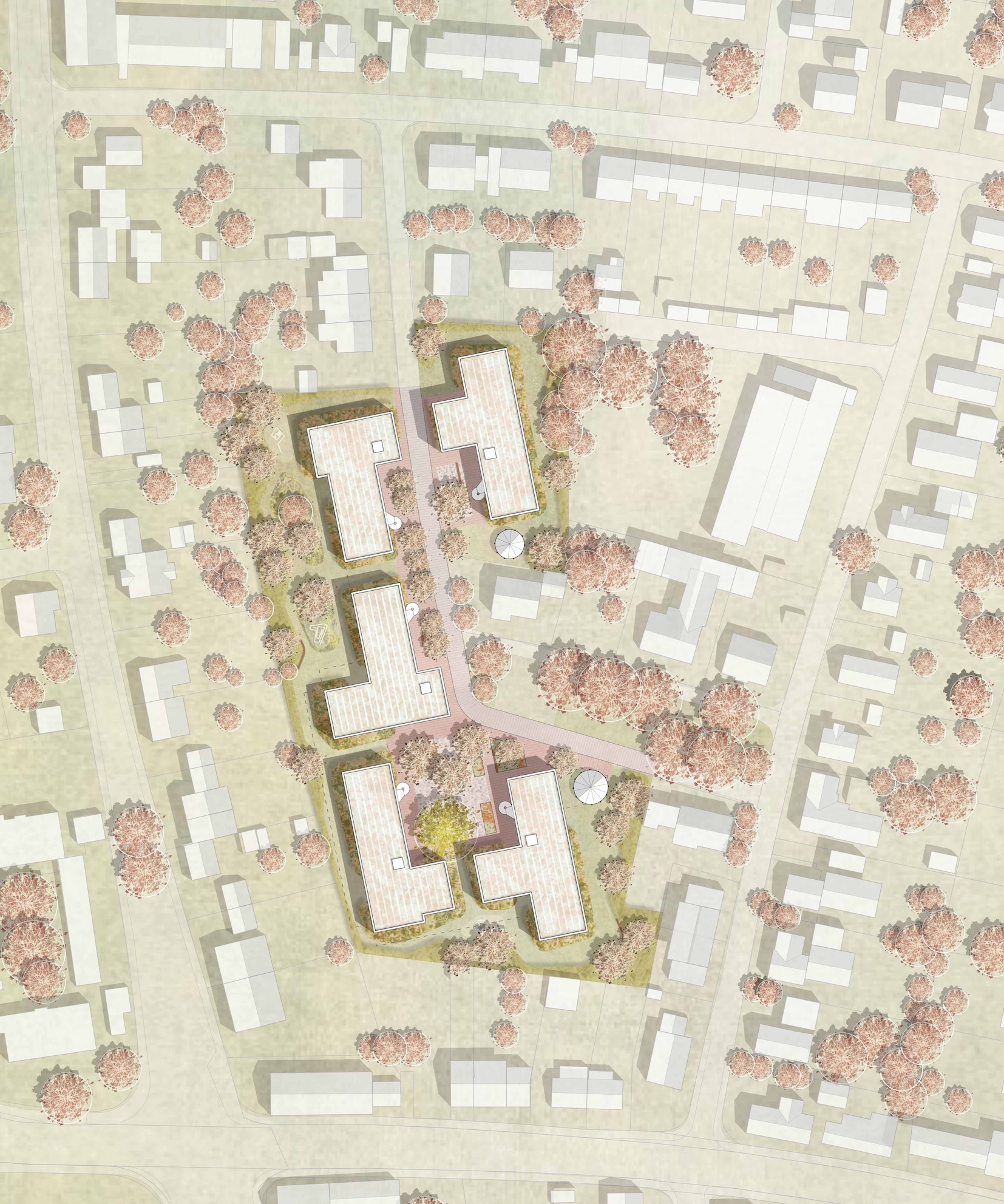 Site Plan
Entrance to the quarter
Site Plan
Entrance to the quarter
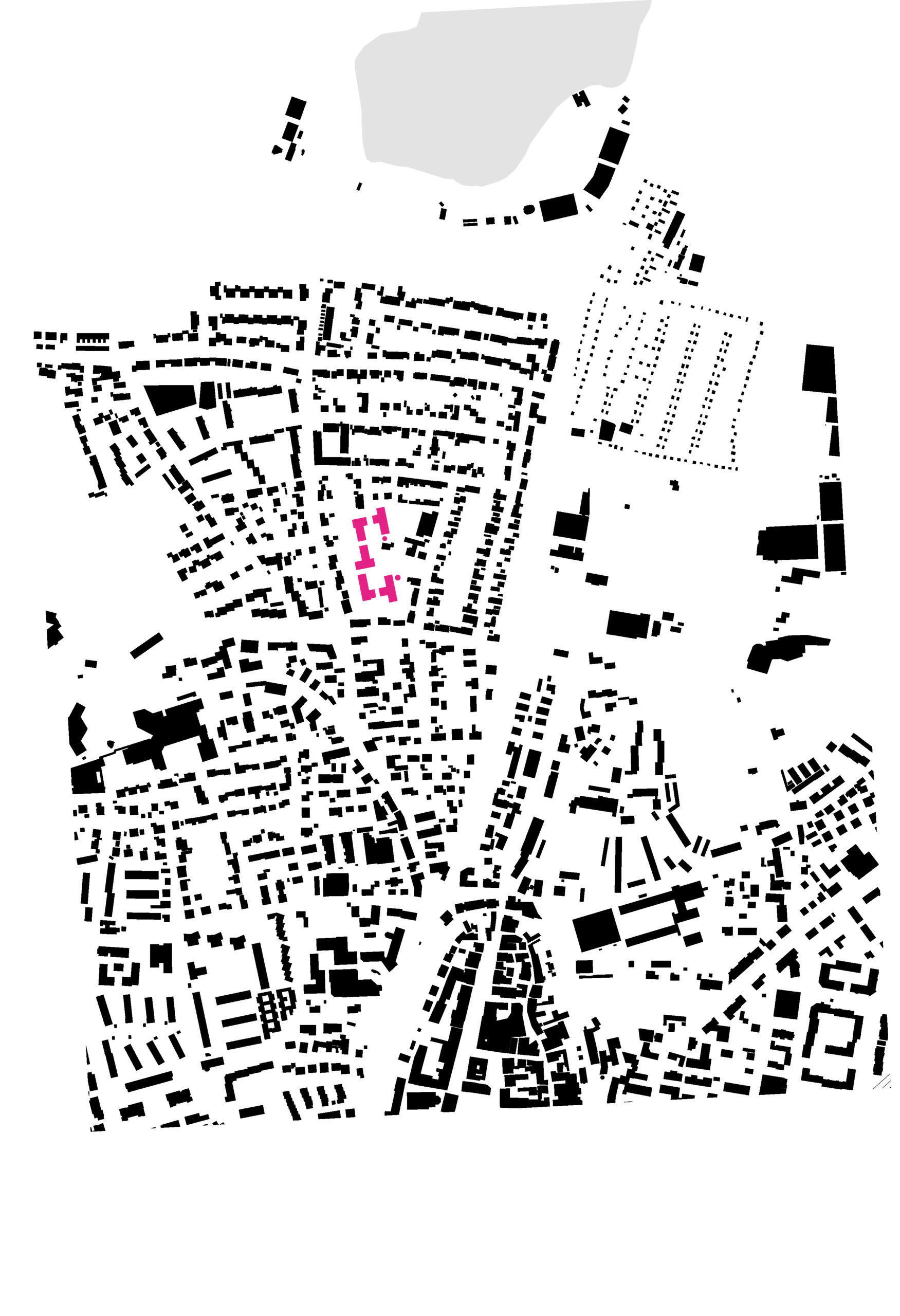 Black plan
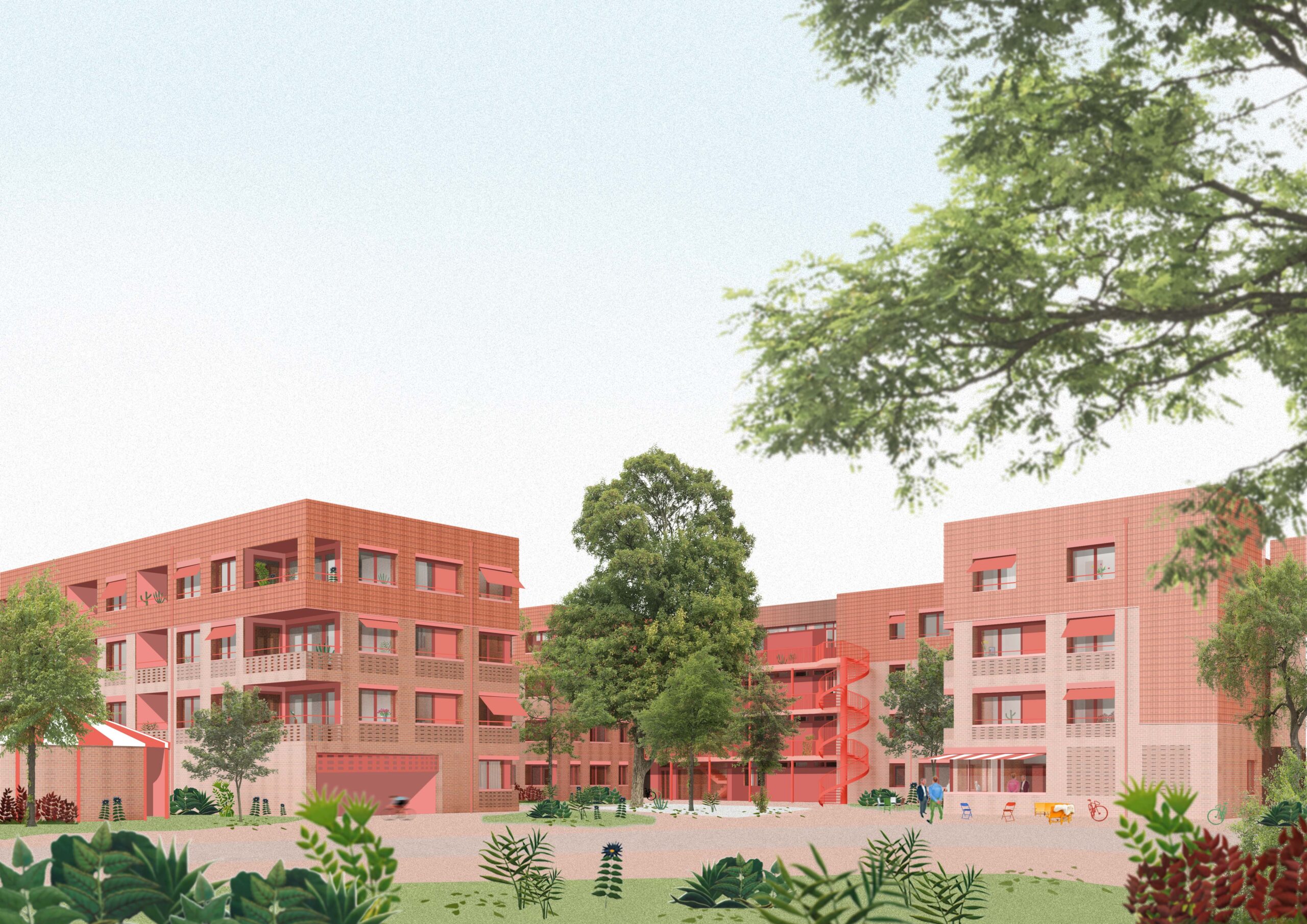 Neighborhood square
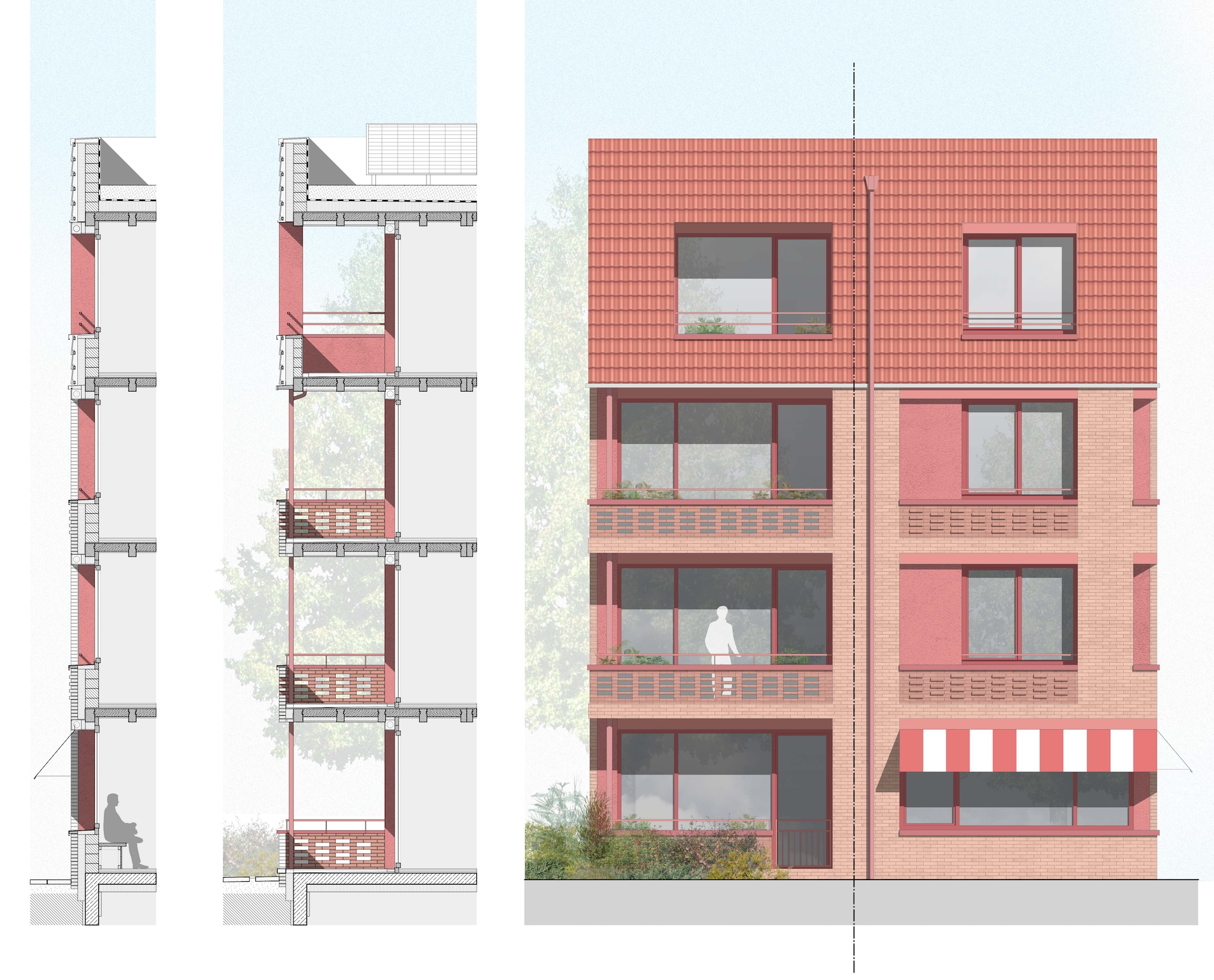 Facade section
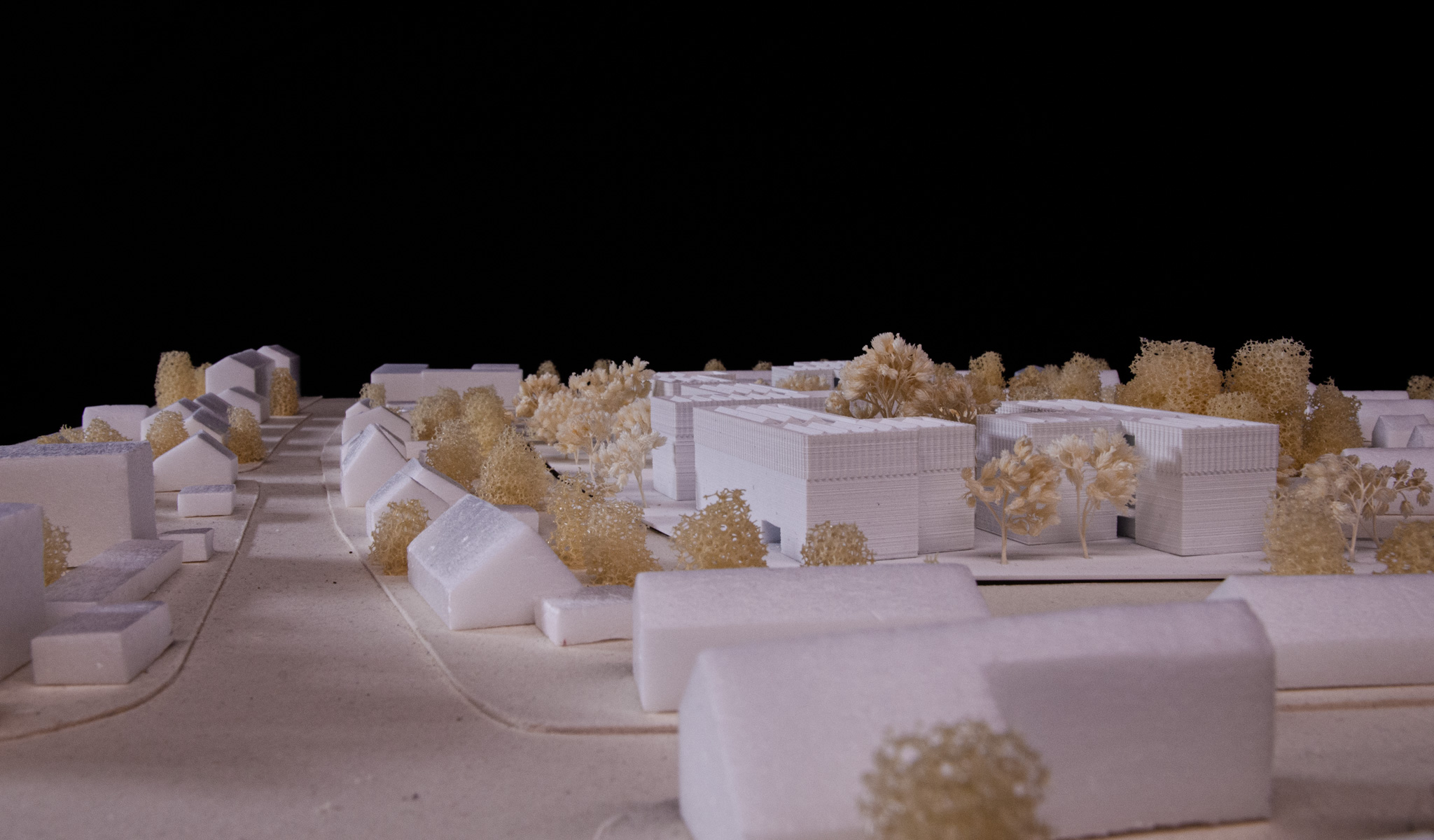 Model Photo
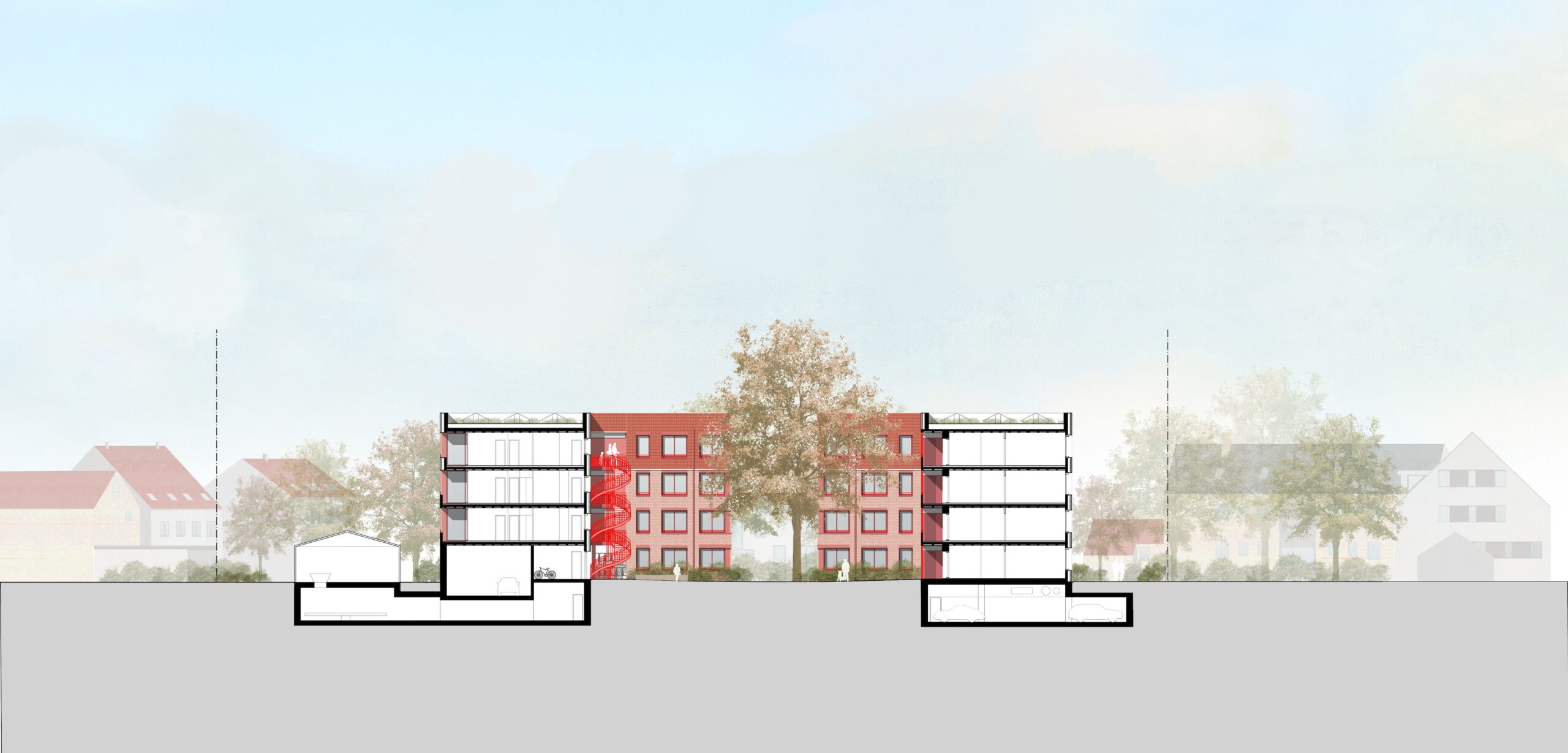 Section
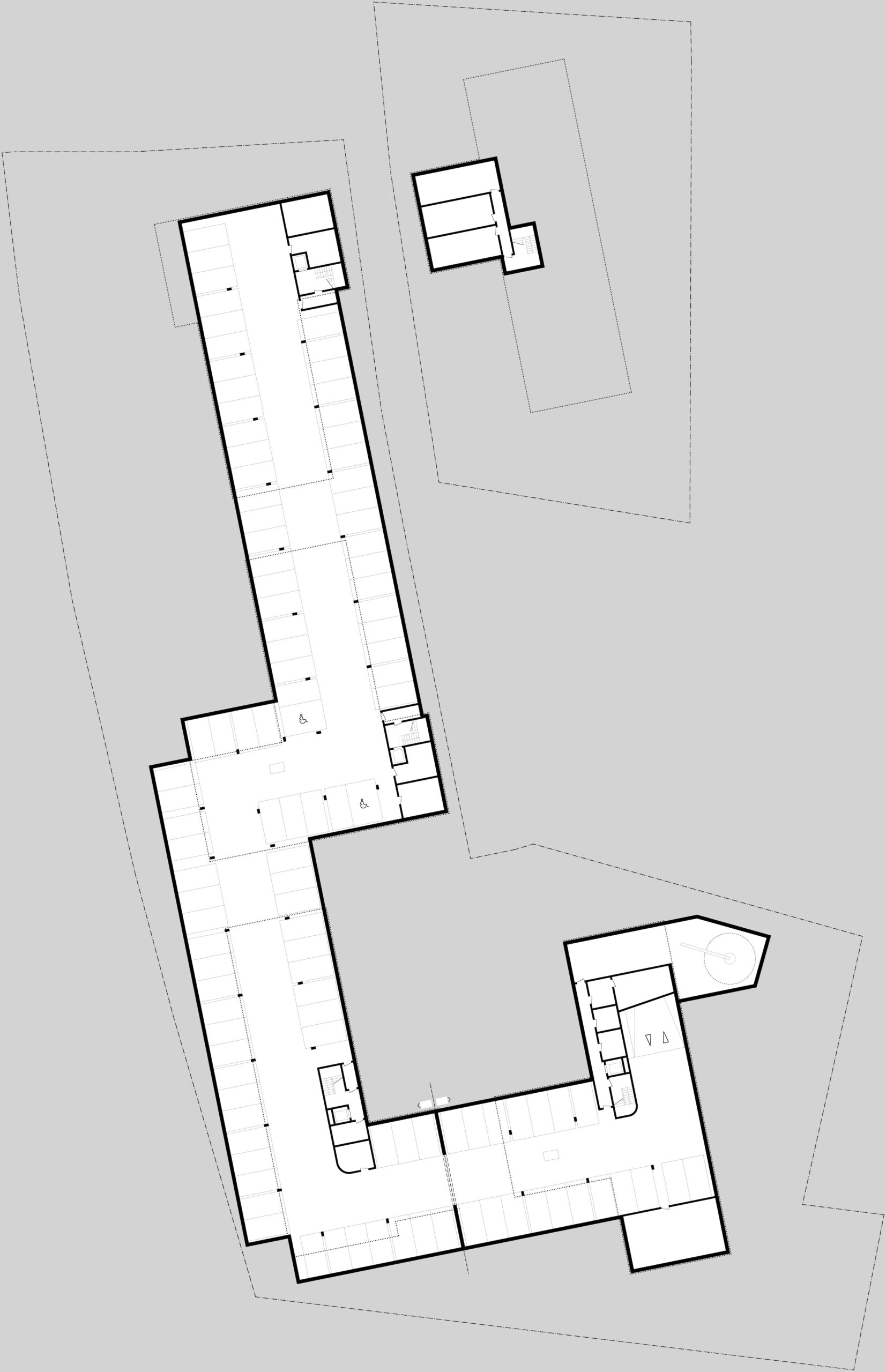 Floorplan Basement
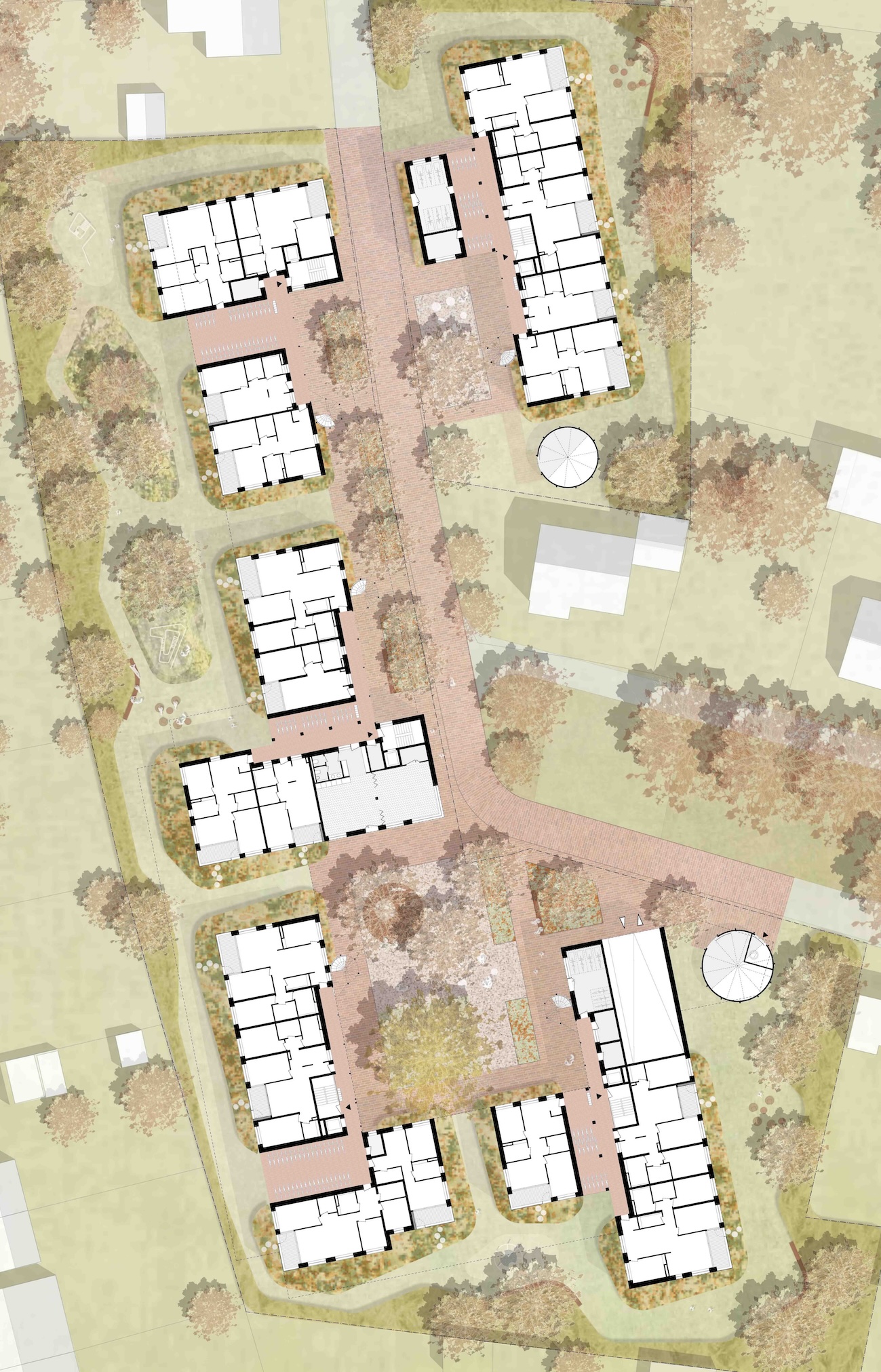 Floorplan groundfloor
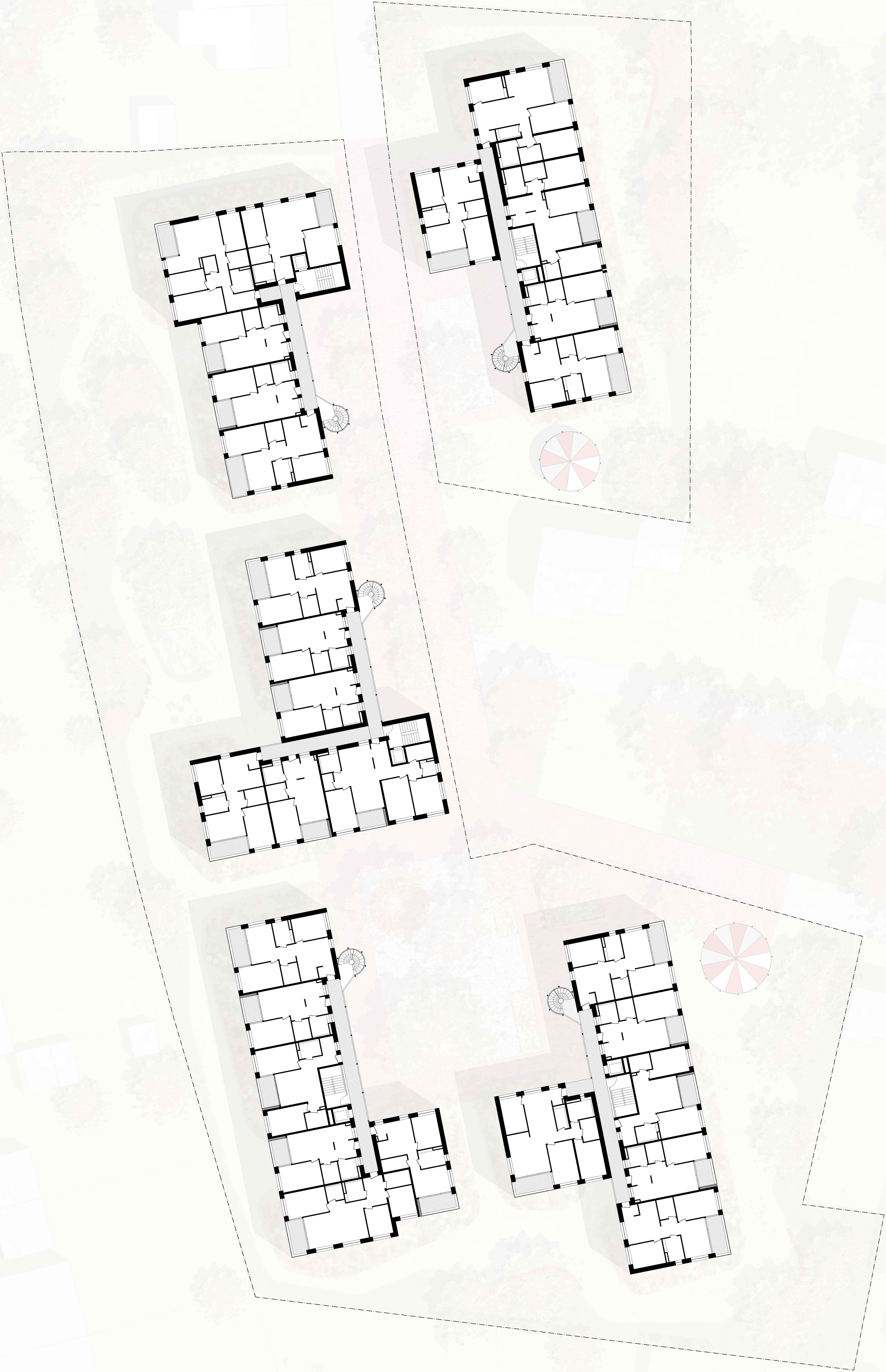 Floorplan standard floor
 View
View
 View
View
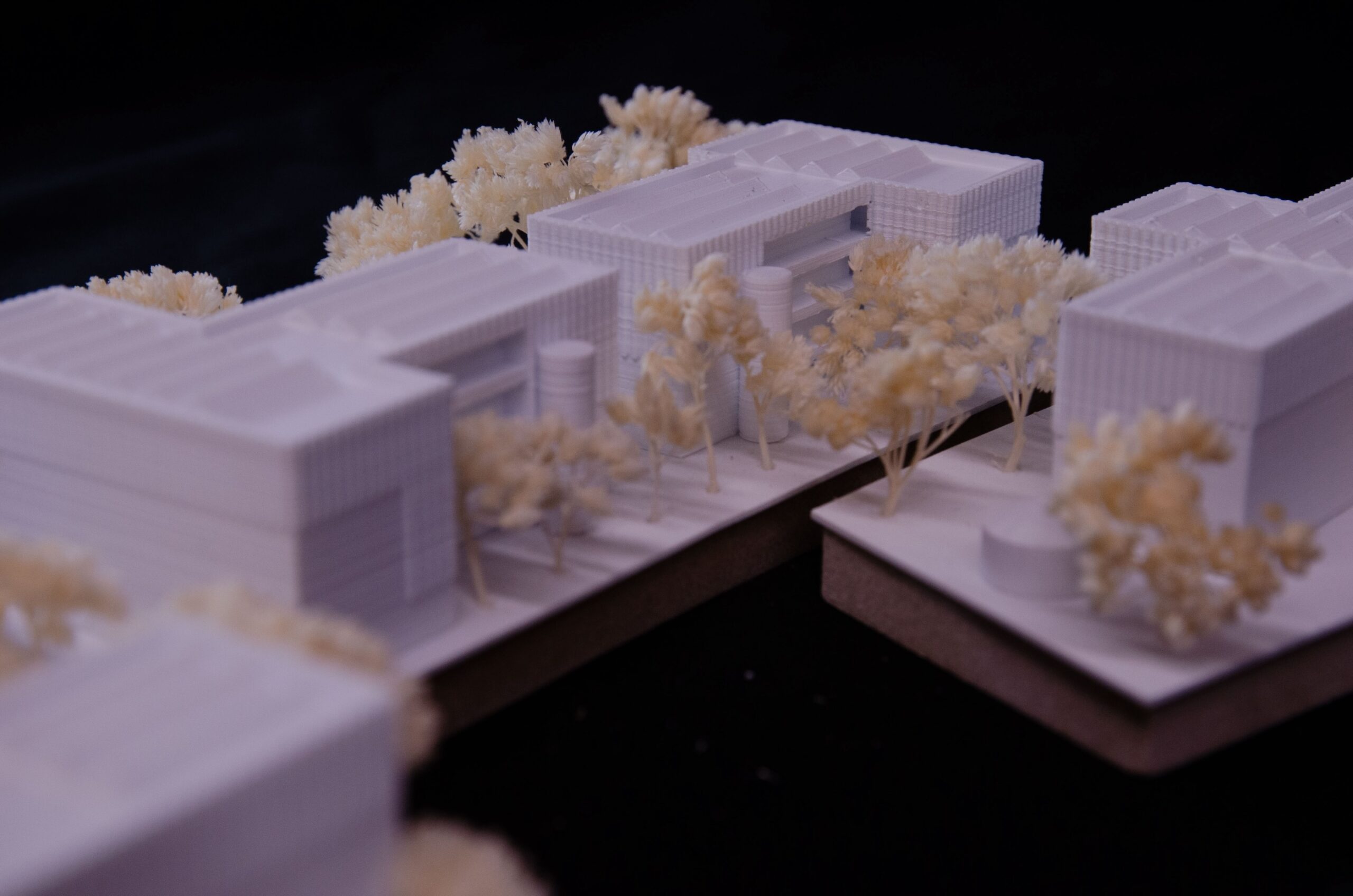 Model Photo